

Most buyers approach a plastic injection moulding project as if the only decision were the number at the bottom of the quote. It is not. The quote is the output of a capability that already exists or does not, and a low price from a supplier who cannot hold the tolerance, staff the tool room, or ship the volume will cost more by the second order than a higher price from a supplier who can. Qualification is the work you do before a tool is cut, and it is the step most often skipped because it feels slower than asking for a number.
This guide treats qualification as an audit, not a beauty contest. It lists the questions that separate a supplier who will deliver a repeatable part from one who will deliver a plausible sample and then drift. The facts used to illustrate the criteria are drawn from a real moulding and OEM/ODM operation with plants in China and Vietnam, but the criteria themselves apply to any supplier you are about to commit a tool and a program to.
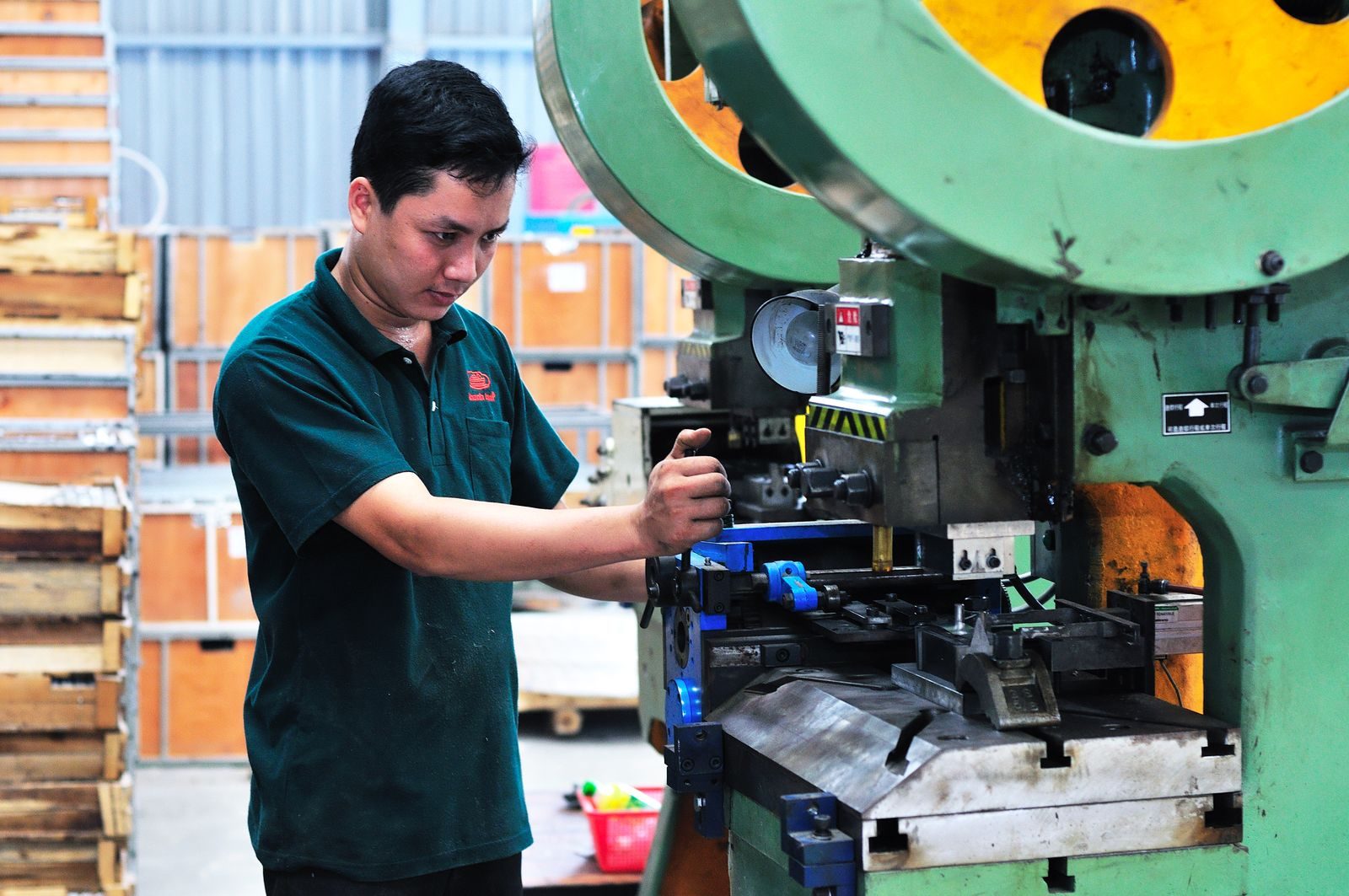
An injection moulding supplier is, first, a fleet of machines, and the fleet decides the envelope of parts they can run profitably and repeatedly. Two numbers matter most: how many machines they run, and how wide the tonnage spread is. A shop with a dozen machines clustered around one tonnage can only serve one slice of the market; a shop with a deep, graduated range can take a part from a small closure to a large appliance housing without subcontracting the tooling work out the back door.
A supplier operating more than a hundred injection moulding machines, spread from 60-tonne units up to a 1200-tonne press, with a dedicated block of high-speed machines in the 180 to 230 tonne range and a smaller set of vertical and blow-moulding units, can absorb both small precision parts and large structural shells in-house. That in-house breadth is what keeps a program from being handed off to an unknown subcontractor the moment a part falls outside the original envelope.
| Machine class | Example tonnage spread | What it tells you |
|---|---|---|
| Standard horizontal presses | 60T, 90T, 120T, 160T, 200T, 280T, 320T, 380T, 470T, 530T, 650T, 1200T | A graduated range means small closures and large appliance shells both run in-house |
| High-speed presses | 180T, 190T, 230T | Shorter cycle times on thin-wall, high-volume consumer parts |
| Vertical and blow-moulding units | 2 vertical, 2 blow | Insert moulding and hollow parts without a second supplier |
| Offshore sister plant | 90-1200T, 25+ units | Second-source capacity and tariff or freight flexibility |
The point of the table is not the exact counts, which change as a plant expands, but the shape of the fleet. A graduated, in-house spread is a structural signal that the supplier controls its own capacity. When you evaluate a candidate, ask for the machine list with tonnage and count; a supplier who cannot produce it quickly is telling you something about how they run.
A moulding shop that buys its tooling from outside has one less lever to pull when a part needs a fix, a revision, or a fast first article. A supplier with its own tool room - CNC machining centres, electrical discharge machining, grinding, and clamping - can cut, prove, and modify a mould without waiting on a third party, and that shortens the gap between a design and a running tool more than any sales promise.
A credible in-house tool room will list, at minimum, CNC machining centres for the steel work, large-format grinding for flatness, slow-wire cutting for fine detail, mirror spark (EDM) machines for polished cavities, and a clamping machine to build and prove the mould. The presence of multiple large grinding and flying-model machines signals capacity to build and rework several tools at once rather than queuing on a single resource.
| Tool-room capability | What it enables |
|---|---|
| CNC machining centres | Precision steel cutting for cavities and cores |
| Large grinding machines | Flat, repeatable mould plates |
| Slow-wire cutting (EDM) | Fine, accurate detail work |
| Mirror spark (EDM) machines | Polished cavity surfaces without manual finishing |
| Vertical mould clamping | Build, prove, and rework tools in-house |
When a candidate describes its tool room, the useful follow-up is not the equipment list alone but the workflow around it: do they run mould-flow analysis before cutting steel, and do they hold the tool through its life or hand it back and walk away? A one-stop OEM/ODM operation that owns the tool room, the press floor, and the assembly line removes three handoff points where quality and schedule usually leak.
Two suppliers can quote the same model and deliver very different parts, because one treats the drawing as a fixed input and the other treats it as a draft to be engineered. The difference shows up in draft angles, wall thickness, gate location, and whether the mould will actually fill without sink or warp. The team that does this work is the difference.
A supplier carrying a dedicated design and engineering group - on the order of fifty design engineers and R&D specialists - can review a part before tooling and flag the changes that prevent a failure two months later. That review is worth more than a slightly lower part price, because a change requested during design costs almost nothing and the same change requested after the tool is cut costs the tool modification and the lost time.
If your part is still moving, or if you are bringing a concept rather than a finished model, the engineering depth of the supplier is the single most important qualification criterion. A purely decorative part can be drawn; a functional part that has to fit, seal, or carry a load has to be engineered, and the supplier's design team is the only thing standing between you and a tool that cannot make good parts.
Any supplier can make one good part. The claim that matters is that they can make the ten-thousandth part the same as the first, and that claim is backed by a quality system and a laboratory, not by a promise. An ISO 9001-certified operation with an in-house test laboratory can verify material, dimensions, and function before a part ships rather than after a customer complains.
Ask what the laboratory actually tests and how the results are recorded. A laboratory that exists only for show produces a certificate; a laboratory that feeds the production process produces consistent parts. The honest question to put to a candidate is not "are you certified" but "what do you measure, how often, and where does the record live".
For a buyer, the practical test is whether the supplier can show a dimensional report and a material confirmation on the first article and then sample the run. A supplier who cannot produce those artefacts on request is not yet qualified, regardless of how the brochure reads.
A single-plant supplier is exposed to everything a single plant is exposed to: a power event, a customs delay, a local disruption, a single-site labour issue. A supplier with a second plant in a different country halves that exposure and gives you a tariff and freight option you did not have before. A moulding and assembly operation with a China base and a Vietnam plant established in 2024 - several thousand square metres of factory, dozens of machines, and a local professional team - is structured for exactly this continuity.
| Site role | What it gives the buyer |
|---|---|
| Established China plant (decades of operation) | Depth of experience, full tool room, large press fleet |
| Newer Vietnam plant | Second-source capacity, freight and tariff flexibility |
| Regional office network | Local contact for design, commercial, and logistics |
The continuity argument is not abstract. When a program runs for years, the question is not whether something will disrupt the supply line but when, and a supplier who can shift load between sites without re-qualifying a tool is a supplier who keeps your line running. A plastic injection molding and OEM/ODM manufacturer with this dual footprint treats the second plant as a structural capability rather than a contingency plan, which is the difference between a supply chain that bends and one that breaks.
Qualification produces a real result only when the supplier is given enough to respond to. A vague request returns a vague quote, and a vague quote cannot be compared with anything, which is how buyers end up choosing on price alone and discovering the gap after the tool is cut. The brief that makes a supplier comparable contains the same elements every time.
Send the 3D model in a neutral format, the 2D drawing with the tolerances that actually function, the material or the performance the material must meet, the annual volume and the expected program life, and the environment the part will live in. Say which dimensions are functional and which are cosmetic, because a supplier who knows one hole is critical will quote and tool differently from one asked only to price a model. Add the compliance the part must meet if it enters a regulated market, and the packaging the shipment needs if it goes straight to a shelf.
A supplier who asks good questions back - about gate location, about the environment, about the volume ramp - is qualifying your part at the same time you are qualifying them, and that two-way review is the strongest positive signal you can get before committing a tool. A robot vacuum manufacturer that also runs the tooling, the moulding, and the assembly under one roof is the kind of vertically integrated supplier this brief is designed to surface.
| Criterion | What a qualified supplier shows | Red flag |
|---|---|---|
| Years in mould making | A multi-decade track record | Unable to name reference programs |
| Machine count and tonnage spread | Graduated range, in-house | One tonnage, heavy subcontracting |
| In-house tool room | CNC, EDM, grinding, clamping | Buys tooling from unnamed third parties |
| Engineering and DFM team | Dedicated designers who review before tooling | Quotes the model without comment |
| Quality system and lab | Certified system, in-house testing, records | Certificate only, no test records |
| Secondary operations | Printing, welding, spraying, marking in-house | Every finishing step outsourced |
| Dual-site capacity | Second plant for continuity | Single point of failure |
| Lead-time transparency | Honest range stated up front | Evasive or unrealistically short |
Score each candidate against the same sheet and the decision stops being a feeling. A supplier who scores well on machine spread, tool room, engineering, and quality but is light on one secondary operation is a different risk from one who is light on all of them, and the scorecard makes that distinction visible instead of buried in a quote comparison.
There is no fixed threshold, but the shape matters more than the count. A graduated tonnage range that covers your part and its likely successors, run in-house, tells you more than a larger fleet clustered on one machine size. Ask for the list and read the spread rather than the headline number.
Not necessary, but valuable. Even a modest program benefits from a supplier who can shift load or route around a disruption without re-qualifying a tool. For a program with a long life or a regulated destination market, the second site moves from nice-to-have to a continuity requirement.
A first-article dimensional and material report, produced by the supplier's own laboratory, against a drawing you both agreed on. A supplier who produces that artefact on request, with records behind it, has demonstrated the capability the rest of the qualification assumes.
Qualifying a plastic injection moulding supplier is the cheapest insurance you can buy on a tooling program, because it is paid for in questions asked before the steel is cut rather than in tool modifications and lost time afterwards. At ZH Industrial Machinery we see the same pattern across the components our handling lines depend on: the buyers who send a complete brief, score the candidate on the same sheet, and visit the tool room are the ones whose tools run true from the first article. If you are about to commit a tool and want a second opinion on a supplier's capability, send us the part and the volume and we will tell you what to look for.
The technical requirements a moulding supplier has to meet are the general discipline of injection moulding. The product and material specifications a buyer should require, and the test methods behind them, normally cite ASTM International standards; the dimensional part of a first-article report rests on the traceability framework published by NIST.