

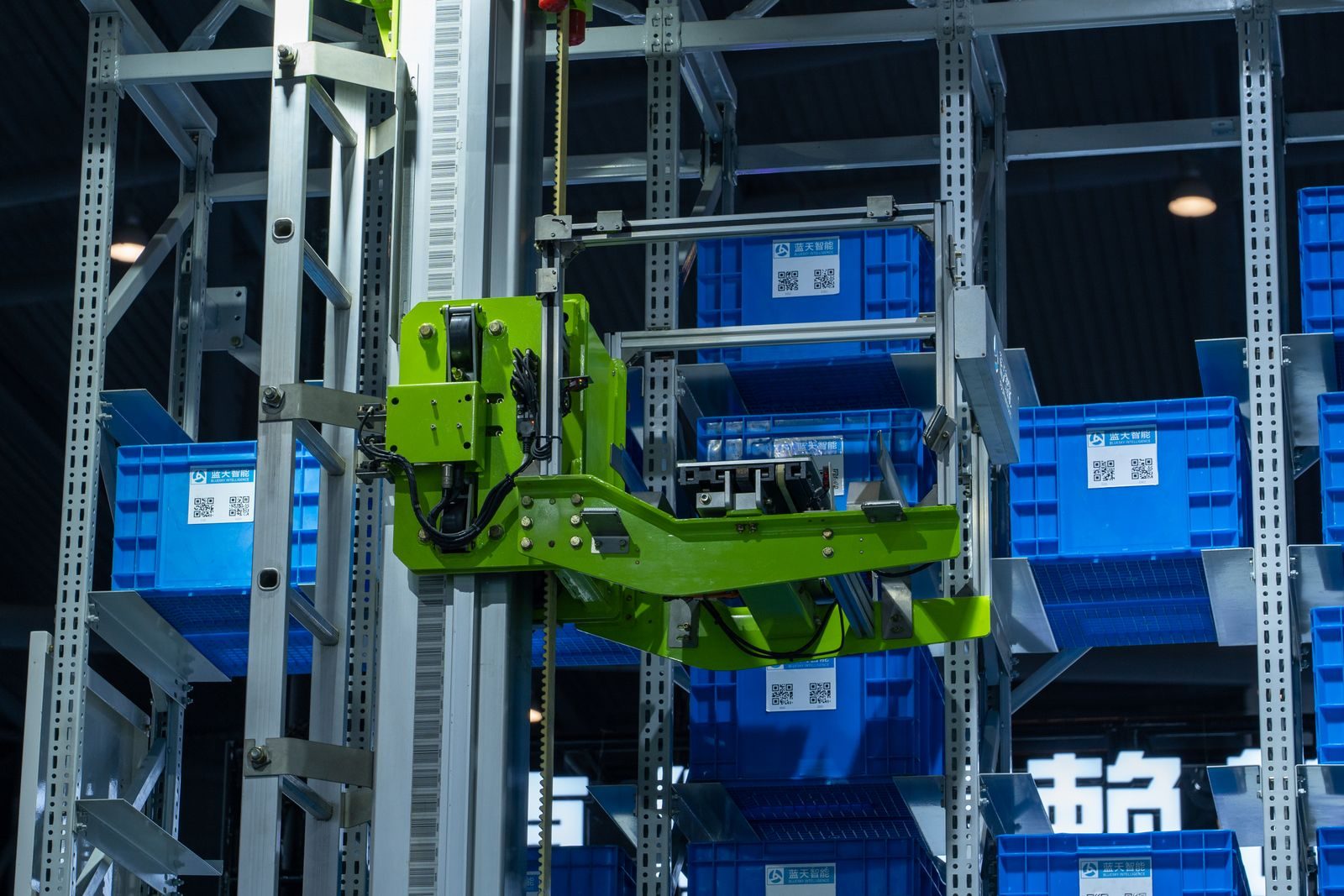
Manual sortation works surprisingly far. A small team at a packing bench, or a floor of pickers tossing parcels into cages by destination, can clear a few hundred items an hour and stay accurate while volumes are low and the destination list is short. The point at which that stops being true is not a single number; it is a set of operating conditions that arrive together.
Four conditions are the usual triggers. Volume has grown past what a bench team clears inside a shift. The destination count has climbed - more carriers, more regions, more store or customer groups - so each parcel needs a decision, not just a toss. Accuracy has started to cost money, through mis-sorts that become returns, redeliveries, or carrier penalties. And the operation is hitting a physical ceiling: there is no more floor to add another manual lane. When two or three of those are true at once, the question is no longer "should we automate" but "what do we need to specify one". The trigger is rarely a single dramatic breakdown; it is the slow, compounding cost of mis-sorts and overtime that eventually makes the capital spend look like the cheap option.
This guide is written for the person who has been handed that question. It covers what to measure before talking to a vendor, how the technology families differ, what integration actually involves, and how to build a payback case that survives contact with finance - without inventing numbers you cannot defend.
A sortation system is designed around the parcel, not the other way round. The single most common reason a first quotation comes back wrong is that the parcel itself was described too loosely. Six facts decide almost everything downstream.
| Data you need | Why it drives the design | Where to get it |
|---|---|---|
| Parcel dimensions (min and max) | Sets chute width, carrier size, and whether small items need a singulator first | Measure a real sample, not the catalogue; include the awkward 5% |
| Weight range | Decides belt load, motor size, and whether a tilt-tray or belt sorter is appropriate | From your WMS despatch records over a peak week |
| Peak throughput (parcels / hour) | The number the whole system is sized to, usually a peak not an average | Pick counts at your worst hour, not your mean hour |
| Number of destinations | Sets how many chutes, lanes, or put-wall slots the layout needs | Count active carrier routes, store groups, and customer bins |
| Existing software environment | Determines how the sorter talks to your WMS, ERP, and scanners | List the systems the sorter must handshake with |
| Available floor space and ceiling | Caps the layout; some technologies need far more footprint than others | Walk the actual area, including column positions |
None of these are difficult to collect, and most already exist in your warehouse management system - the mistake is treating them as obvious and skipping the exercise. A parcel sortation systems supplier can only design to the data you give it; the win is in measuring the real peak and the real awkward parcels rather than the tidy average.
The main automated families solve the same problem - move each parcel to the right place - but they differ sharply in footprint, speed, and the kind of parcel they like. The comparison below is a planning starting point, not a substitute for a layout study.
| Technology | Best fit | Footprint & speed | Watch out for |
|---|---|---|---|
| Cross-belt sorter | High-volume, many destinations, mixed parcel sizes at speed | Larger floor; high rates, gentle on fragile items | Higher capital; needs a stable induction feed |
| Narrow-belt sorter | Small-to-medium fulfilment centres with tight layouts | Compact; the TR200-1000 is published at 10,000 parcels per hour | Less suited to very large or very heavy parcels |
| Swivel / pop-up wheel sorter | Medium rates where a flat belt can divert items sideways | Moderate footprint; good for cartons and totes | Item geometry must suit wheel diversion |
| Put-wall system | E-commerce order consolidation, not carrier routing | High accuracy, slot-based; TR340*135 published at 99.99% and 2,000 orders/hour across 160 slots | Solves a different problem (orders, not destinations) |
These figures are the manufacturer's published product specifications, not independent benchmarks, and the right choice depends on your own parcel mix. A narrow-belt sorter rated at 10,000 parcels per hour is a strong fit for a compact fulfilment floor; a put-wall system is the right tool when the bottleneck is building multi-item customer orders rather than routing parcels to carriers. Conflating the two is the most common technology mistake, because they look similar on a brochure and solve different ends of the operation.
Buyers often budget for the sorter and forget that the sorter is the smallest visible part of the work. A sortation line is a chain: dimensioning, weighing, and scanning (DWS) at induction; the sortation machinery itself; a warehouse control system (WCS) that sequences it; and interfaces to the WMS and ERP that tell it what each parcel is and where it must go. Miss any link and the line either stops or mis-sorts. Each handoff in that chain is a place where a parcel can be lost or delayed, so the control logic, not the hardware, is what most often decides whether the line meets its promised rate.
Three integration points decide whether the project delivers. The scan window - the moment and angle at which a barcode or RFID is read - sets the real throughput, not the belt speed. Exception handling, the path for unreadable, overweight, or misrouted parcels, is where manual cost sneaks back in if it is not designed. And safety, the guarding, e-stops, and access control around moving machinery, is non-negotiable and must be specified, not bolted on.
TrueLiSort, like the established suppliers in this space, publishes an integration scope that runs from conveying and DWS through controls and WCS to WMS and ERP interfaces and exception handling - the point being that sortation is bought as a system, not a machine. Treat any quotation that lists only the sorter as incomplete.
A payback case does not need to be precise to be useful; it needs to be honest about its own inputs. The categories below are the ones to fill with your own figures. The shape of the result matters more than any single percentage.
| Cost or saving | What to put in |
|---|---|
| Labour per shift at current volume | Headcount x fully-loaded cost, at today's peak, not average |
| Mis-sort and return cost | Rate x average cost of a return, redelivery, or carrier penalty |
| Throughput ceiling cost | Revenue or penalty lost when manual sort cannot clear the peak |
| Space recovered or avoided | Value of floor freed, or of not leasing more |
| Capital and run cost of the system | Quoted price plus energy, maintenance, and spares |
The honest version compares total cost over the expected program life, including the cost of a design that changes. A system justified only by an optimistic labour number collapses the moment volume dips; a case built on the peak hour and the real mis-sort rate is harder to attack. Keep the inputs in a spreadsheet you can show, because the discipline of writing them down is what stops the case from drifting into a sales pitch.
The fastest route to a usable quotation is to send the same brief to every supplier. TrueLiSort's published design sequence is a useful template because it mirrors what any competent integrator needs: requirement data, a proposed solution and layout, an engineering review, manufacturing and factory acceptance (FAT), installation and site acceptance (SAT), then training and go-live.
Send the six parcel facts from the data section above, the peak hour specifically, the destination count, the systems the sorter must integrate with, and the physical space you have. Ask each vendor for the same artefacts: a layout drawing, the throughput they will commit to at your parcel mix, the scan and exception strategy, and the FAT and SAT plan. Quotes that omit any of those four are not comparable to ones that include them, and the gap is usually where the cost hides.
There is no universal threshold, because it depends on destination count, accuracy cost, and labour rates. The useful test is whether mis-sorts and peak-hour backlog already cost more than a system would; when two of the four triggers in the opening section are true, it is time to model it with your own numbers.
If the pain is routing parcels to carriers and destinations, you need a sorter. If the pain is building multi-item customer orders accurately and fast, a put-wall is the tool - and the two are often used together, with the sorter feeding consolidated batches to put-walls.
Usually more than the sorter hardware, because it covers scanning, controls, software interfaces, and exception handling. A quotation that lists only the machine is incomplete and should be treated as such.
Long enough that it belongs in the business case: design, manufacturing, factory acceptance, installation, and training each take time, and the sequence - requirements, layout, engineering, build, install, go-live - is the same regardless of supplier. Plan the peak season around it, not against it.
Partly. Throughput can often be raised by adding induction or chutes, but floor space and the original layout cap it; design for the volume you expect in year three, not just today, or accept a future re-layout.
Sortation automation is a planning problem long before it is an engineering one. At ZH Industrial Machinery we see the same pattern across the handling lines we build: the operations that collect the parcel data first, model the payback honestly, and brief vendors on the same facts are the ones that commission a system which clears the peak instead of one that merely relocates the bottleneck. If you are weighing a sortation project, send us your parcel profile and peak hour and we will help you scope whether automation pays - and which technology family fits the floor you have.
Every mainstream option here is an instance of sortation, and whichever is chosen its accuracy is bounded by how reliably each parcel is identified on the way in (barcode capture). The capital-economics side of the decision is covered by applied distribution research such as that published by the MIT Center for Transportation and Logistics.