

Machine guarding has a reputation for being the part of a project that is added last, in whatever form is quickest, once the machine already works. That is the reverse of how it should run. The guard is a consequence of how the machine can hurt someone, and that assessment belongs before the machine is built, not after.
The purpose of a guard is to prevent a person reaching a hazard - a rotating shaft, a moving gantry, a closing press, a hot surface, a live conductor or a laser beam - and to contain anything the machine might eject. Before any guard is specified, the hazards have to be identified and the exposure understood: who reaches in, how often, from which side, and whether the machine can be stopped before they get there.
The output of that assessment is not a shopping list of panels; it is the basis for choosing a guard type. A hazard that is never approached deliberately and can be fully enclosed takes a fixed guard. A hazard approached to load parts takes an interlocked guard. A hazard that must stay visible and be reached through takes a device such as a light curtain. Choosing the guard before the assessment is how sites end up with protection that is either bypassed or useless.
| Guard | Suited to | Its own weakness |
|---|---|---|
| Fixed guard | Hazards with no routine access | Removed and not refitted during a repair |
| Interlocked guard | Access to load, unload or clear material | Interlock defeated or the machine run in a manual mode |
| Light curtain or scanner | Frequent access with the process visible | Blanked out, moved, or the warning re-armed on a fault |
| Two-hand control | Keeping both hands clear of a closing motion | Fitted so it can be operated with one hand and a knee |
| Exclusion by distance | Robots and cells with a defined envelope | Envelope assumed from the drawing rather than measured |
Every one of these depends on maintenance as much as design. A guard's effectiveness is its condition, and on an ageing machine the condition of the guarding frequently lags the condition of the machine it protects.
An interlock is a small device standing between a person and a hazard, and the history of machine safety is largely a history of interlocks being defeated. A switch that a key can be left in, a guard that will latch with the interlock held down, a mode selector that lets the machine run with the guard open - each is a design decision that makes defeat easy and therefore likely.
The countermeasure is to design out the possibility rather than to rely on discipline. Use coded or trapped-key interlocks where the guard must stay shut for the cycle; make the machine's safe state the default on any interlock signal; and remove bypass modes from the operator level so that defeating the guard is not merely forbidden but awkward. A guard that is easy to defeat will be, eventually, by someone under production pressure.
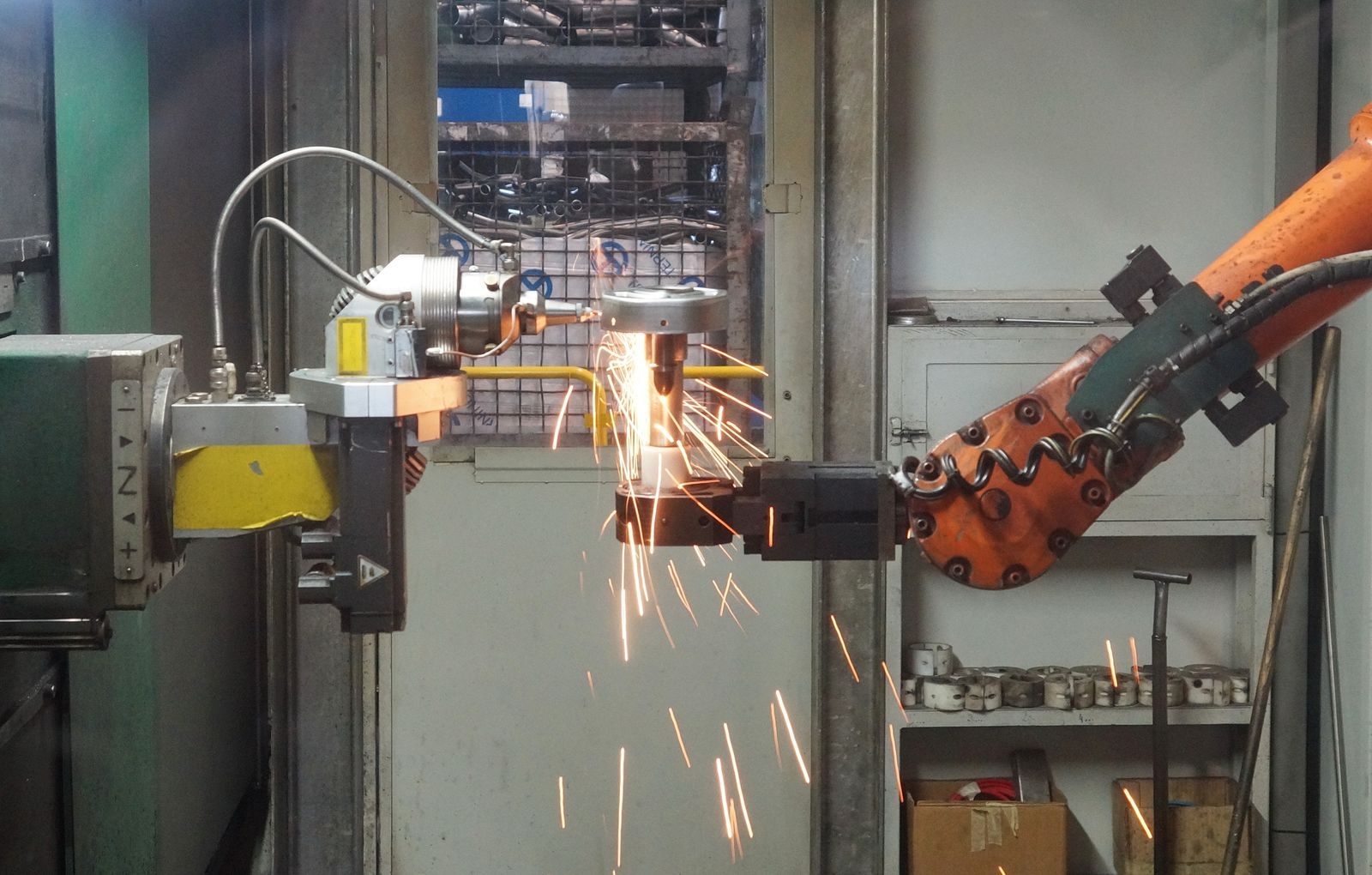
On a purpose-built cell the guard and the machine are designed together, because the enclosure decides access, cooling, lighting, fume extraction and the reach of the handling equipment. That is why builders of automated cells - such as TrueSynRobotic, which builds robotic laser welding and cutting systems - treat the enclosure and interlock scheme as part of the cell specification rather than as a separate purchase. A guard designed after the cell is built usually compromises either safety or access, and often both.
An emergency stop is a stop of last resort. It is not a substitute for a guard, and it is not a substitute for a safe stop on a normal access. On equipment with stored energy - a hydraulic press, a suspended load, a rotating mass - pulling the stop does not necessarily make the machine safe, because the energy may still be present after the motion stops.
The useful question is what happens after the stop: does the load stay where it is, does it descend, does a stored charge remain? The answer belongs in the design, in the isolation procedure, and in the training, because an operator who believes the e-stop has made a machine safe is in more danger than one who knows it has not.
A safety function that has never been operated is unproven, however well it is documented. Each guard interlock, light curtain, two-hand control and emergency stop should be operated deliberately, the machine's response observed, and the result recorded - on installation, after any change, and at intervals thereafter. Reading the wiring diagram proves the design; only operating the device proves the installation.
The record matters as much as the test. A written log of what was tested, by whom, on what date, and what was found is what turns a safety system into evidence rather than an assumption, and it is the first thing anyone asks for after an incident.
Yes, and it is done constantly, but it has to start from a risk assessment of the machine as it stands. A retrofit guard that follows a drawing rather than the actual hazards tends to block access without removing the risk, which produces pressure to remove the guard.
They protect against different things. A fixed guard prevents reaching a hazard; a light curtain detects the approach and stops the machine in time. The curtain is the right answer where access is frequent, but only if the stopping performance has been verified against the approach speed - which is a measurement, not an assumption.
The duty generally falls on the employer using the machine to ensure it is safe in their workplace, whatever the supplier provided. Treat the supplier's guarding as a starting point to be verified against your own risk assessment, not as a finished answer.
Guarding and safe working are the difference between a machine that runs for years and one that eventually hurts someone, and the discipline is the same either way: assess, design, test and record. ZH Industrial Machinery supplies industrial equipment and the safety systems around it, and we are happy to review a machine's guarding and safety functions with a site before a problem rather than after one.
The guarding duties around powered machinery are the general obligation published by the US Occupational Safety and Health Administration, and the wider discipline is described under machine guarding. Where the hazard is a laser, the controls that apply come from the same authority's laser hazard guidance. How the safety requirements themselves are expressed, test methods and measurement traceability included, rests on ASTM International standards and the NIST framework.