

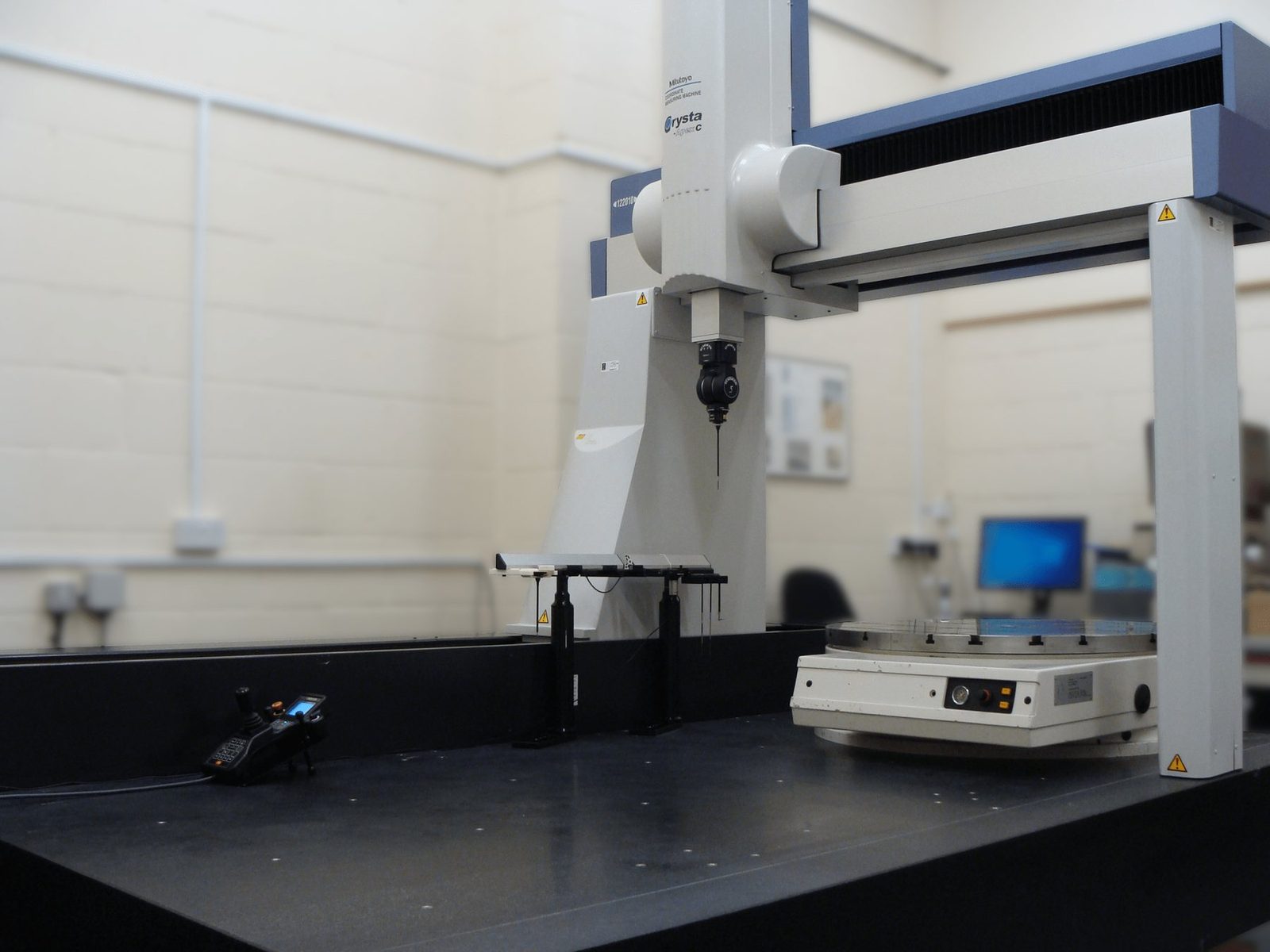
Inspection discipline transfers across industries, but the failure modes do not. A machined component is accepted or rejected on dimensions that a caliper settles. A moulded plastic toy has dimensional features, but its acceptance really depends on three things that measuring cannot settle: whether the colour matches the approved sample under the light the customer will see it in, whether the moving parts still move after the drop test they will certainly receive, and whether the labelling is correct and permanent. A batch can be dimensionally perfect and completely unsaleable.
The second difference is the cost of a miss. On a machined part, a defect is usually caught at assembly and reworked or scrapped. On a toy, the defect reaches a child, and the outcome is a recall notice rather than a rework tag. That asymmetry is why toy inspection is organised around sampling and destructive testing rather than around 100% measurement, and why the plan has to be written before production starts rather than improvised at the loading dock.
There are three inspection points in a toy programme, and using only the last one is the most common and most expensive mistake. The first is before production, on the first articles off the tool; the second is during production, while the run is still in progress; the third is before loading, on the finished and packed goods. A defect found at the first point costs a tool adjustment; the same defect found at the third point costs the entire run.
| Stage | When | What it decides | Cost of a miss |
|---|---|---|---|
| First article inspection | Off the tool, before the run | Dimensions, colour, gate position, function, labelling placement | Tool modification and a delayed run |
| During production inspection (DUPRO) | At 20–30% of the run | Whether the process is drifting — colour, flash, short shots | Rework or scrap of a partial run |
| Pre-shipment inspection (PSI) | On finished, packed goods | Whether the shipment is acceptable as packed | The whole batch, plus freight |
The pre-shipment stage is the one most buyers know and the one that saves the least, because by then the goods are made and packed. If budget allows only one additional stage beyond it, add the first-article check: it is the only one that can still change the tool.
The checklist below is the working core of a pre-shipment inspection. It is deliberately ordered so that the checks that stop the shipment come first, and the cosmetic ones — which are negotiable and usually resolved with a discount rather than a rejection — come last.
| Check | Method | Accept / reject basis |
|---|---|---|
| Safety labelling and age grading | Visual, plus a scratch or solvent test on printed marks | Any missing or illegible tracking label or age symbol rejects the batch |
| Small parts and attachments | Torque or pull test on eyes, wheels, appliqués | Any part that detaches under the test rejects; this is a recall-class defect |
| Sharp points and edges | Edge probe or tape test on accessible edges | Any accessible sharp edge on a toy for the specified age band rejects |
| Function | Operate the mechanism through its full travel, repeatedly | Any unit that binds, jams or fails to return rejects the sample lot |
| Colour against approved sample | Side-by-side under D65 or daylight, not under workshop lighting | Visible deviation from the approved master sample rejects |
| Dimensions | Calipers on the functional features only | Out-of-tolerance only where the dimension is functional |
| Surface quality | Visual at a defined distance and light level | Flash, sink marks, short shots and gate blush within the agreed AQL |
| Odour | Smell the sample; strong solvent or plasticiser smell is a red flag | Strong or chemical odour triggers a material re-check before acceptance |
| Packaging and packing | Carton count, barcode scan, drop test on a sealed carton | Wrong count, wrong barcode or a crushed carton rejects |
Two of those rows deserve emphasis because they are routinely skipped. The labelling check is a compliance matter, not a cosmetic one: a tracking label that is printed rather than moulded can wear off, and a missing age symbol is a customs and retail rejection in most markets. And the odour check, which sounds unscientific, is one of the fastest indicators of a wrong plasticiser or an uncured resin — a batch that smells wrong usually is wrong, and it is worth a laboratory check before it ships.
Nobody inspects every unit of a large toy run; the question is how many to inspect and what a failure in the sample entitles you to reject. The standard framework is the acceptable quality limit, a number agreed in advance that describes the worst defect rate the buyer will accept. A common arrangement on toys is a critical AQL of zero — because critical defects are the recall-class ones and there is no acceptable rate for them — a major AQL around 1.0 and a minor AQL around 2.5.
What the sample size buys you is confidence, not certainty. A sample of 125 units drawn at random from a batch of 5,000 tells you the batch is probably acceptable if no critical or major defects appear; it does not prove the batch is clean. The practical consequences are two. First, the sample must be genuinely random — a factory that offers "we picked some good ones" has defeated the plan, and the inspector should draw the sample personally from the finished cartons. Second, one sample is not a process: a batch that passes PSI after two DUPRO checks is far more trustworthy than one that passes PSI alone, because the process was shown to be stable while it was still running.
For small first orders and private-label programmes, where quantities are too low for a formal sampling plan to be meaningful, the alternative is 100% inspection of a defined list of features — labelling, function and colour — with dimensional checks on a handful of units. That is the arrangement that usually suits brands working with a manufacturer on an OEM or ODM toy programme for the first time, and it converts naturally to sampling once the process has proved itself across two or three runs.
For a first order, or any order from a factory you have not used before, a third-party inspector is worth the fee — not because you cannot do the work, but because a factory negotiates differently with an independent report than with the buyer's own opinion. Once a supplier has delivered three or four clean runs against your checklist, self-inspection on a shortened list is reasonable. Keep the full checklist for every new product and every new factory.
Safety labelling and age grading, because it is the failure that stops a shipment at customs or at the retailer's receiving dock, and it is the one that is cheapest to prevent. Verify that the tracking label is permanent rather than printed, that the age symbol matches the test report, and that the warning text is present and legible. A batch that fails this check cannot be sold at all, regardless of how well the toys are made.
Colour mismatch is normally a negotiable defect rather than a recall-class one, and the usual outcomes are a reprint or re-spray if the run is still in progress, or a discount against a re-run if it is not. What matters is that the deviation is documented against the approved master sample and that the master sample itself is retained and dated — without a reference sample, a colour dispute is unresolvable.
The destructive tests — drop, pull and torque — should be run on a defined number of units from every batch, typically a small fixed sample agreed in the purchase order. The units tested are not saleable, which is exactly why the number is fixed rather than large. What you are verifying is not the individual unit but the process: if the attachment strength on three sampled units is consistent, the fourth thousand is very likely to be consistent too.
Toy inspection is a discipline of sequence more than of technique: check before the run, check during the run, and check before loading, in that order, with the same written criteria each time. The factories that welcome that sequence are the ones worth keeping. ZH Industrial Machinery supplies and services industrial machinery, and the same logic applies on the shop floor as it does in a toy factory — decide what acceptable means in writing, then verify it at the point where a correction is still cheap.
The statistical basis of acceptance sampling is described under acceptable quality limit and sampling. Product safety testing for toys is covered by toy safety standards. Material and test method requirements are expressed in ASTM International standards, and the measurement framework behind them rests on the NIST foundation.