

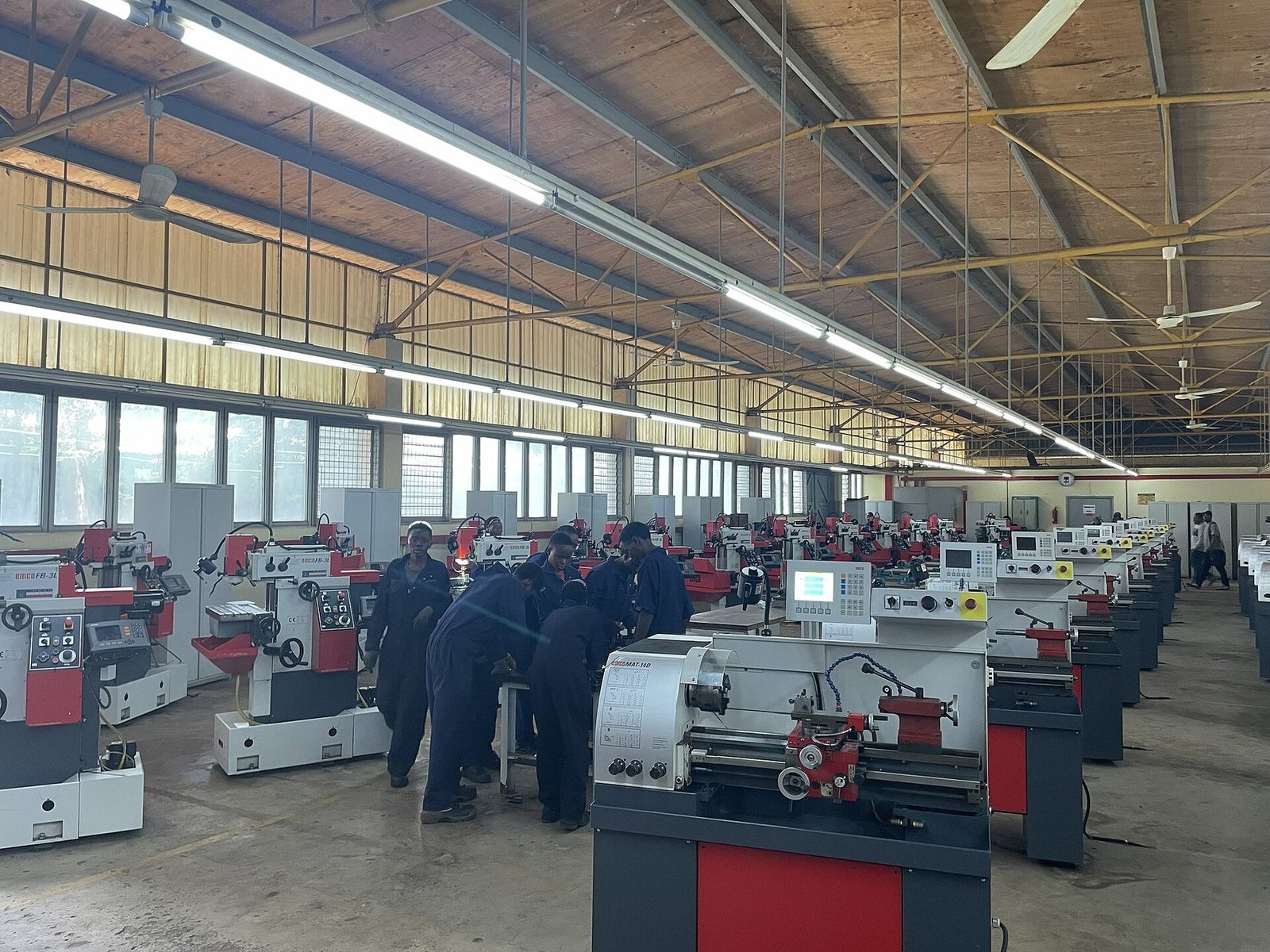
Commissioning is where installed hardware becomes a working asset, and it is the last point at which a problem is cheap to find. Once a line is in production, every fault discovered later costs the production time lost while it is closed out. A commissioning checklist exists to move that discovery earlier - onto the site, into a planned window, with the supplier still on the hook.
Commissioning actually begins with the installation conditions being confirmed: foundations level and cured, services at the right point and capacity, clearances to the drawing, and the access routes the equipment will need for installation and for future maintenance. A fault found here - an under-strength floor, a service point in the wrong place - is corrected in hours; the same fault discovered once the machine is standing is corrected in weeks. Verifying the conditions against the drawings before delivery is the highest-return step in the whole process.
| Stage | What to verify |
|---|---|
| Pre-installation | Foundations, levels, services, clearances, access, lifting plan |
| Mechanical | Levelling, alignment, fastening torque, guarding in place, lubrication |
| Electrical | Supply and protection, phase and rotation, earthing, labelling, emergency stop |
| Controls | I/O check, interlocks, sequences, alarms, parameter backup |
| Safety | Guards and interlocks tested, isolation proven, safe state on fault confirmed |
| Function and performance | Dry run, then load run to the specified rate and quality |
| Handover | As-built drawings, manuals, spares list, training, signed performance record |
The safety functions are the one part of a commissioning that must be tested rather than observed. A guard interlock, an emergency stop, a light curtain or a two-hand control should be operated deliberately, in the same way an operator would, and the machine's response recorded. Reading the wiring diagram proves the design; only operating the device proves the installation. Any safety function that cannot be tested should be treated as unproven rather than assumed working.
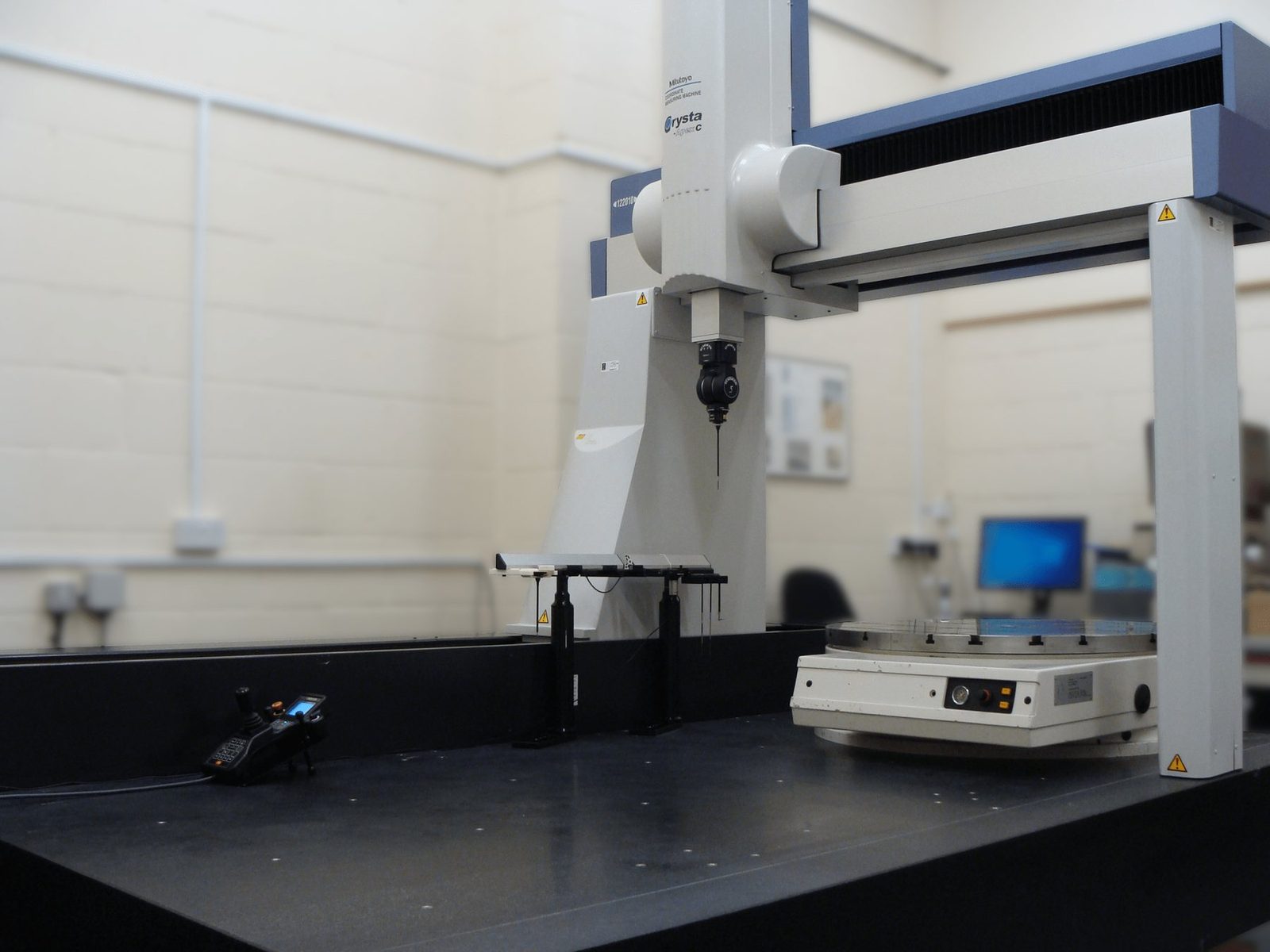
A commissioned machine should hand over evidence, not just a running machine. That means the dimensional checks the specification called for, the performance run at the specified rate and quality, and the records behind both. The basis for those checks is the same as any other inspection discipline: how the requirements are expressed, the test methods used to verify them, and the traceability of the measurements themselves. A handover that produces a signed performance record with the measurements behind it is one that can be defended a year later, when the question is whether a problem is a commissioning issue or a wear issue.
Commissioning is the only window in which the people who will operate and maintain the machine can be trained by the people who built it, on the machine, before production pressure arrives. Operator training on normal running and first-line faults, and maintenance training on the tasks in the schedule, belong in the commissioning plan alongside the mechanical and electrical checks. Deferring training to after handover is how a site ends up learning the machine by breaking it.
The party who will live with the equipment. A checklist owned by the supplier tends to test what the supplier built; a checklist owned by the site, and signed off by both, tests what the site needs. The best arrangement is a site-owned checklist the supplier contributes to and signs.
All of the mechanical, electrical, control and safety checks, and the dry and low-rate runs. The full performance run to rate and quality needs the real product, so it is scheduled first, in a window, before the line is relied on.
The parameter and program backup, and the safe-state-on-fault test. Both are easy to defer when the machine is running and both are the first things anyone needs when it stops.
Commissioning is the discipline that converts a delivery into an asset, and the checklist is what keeps that discipline honest. ZH Industrial Machinery supplies industrial equipment and supports it through installation and commissioning, and we are glad to work through a commissioning plan with a site before the equipment is on the floor rather than while it is being started up.
The dimensional evidence a handover relies on is built on the same basis as any other inspection: geometric dimensioning and tolerancing for how the requirements are expressed, ASTM International for the test methods, and the traceability framework published by NIST for the measurements themselves.