

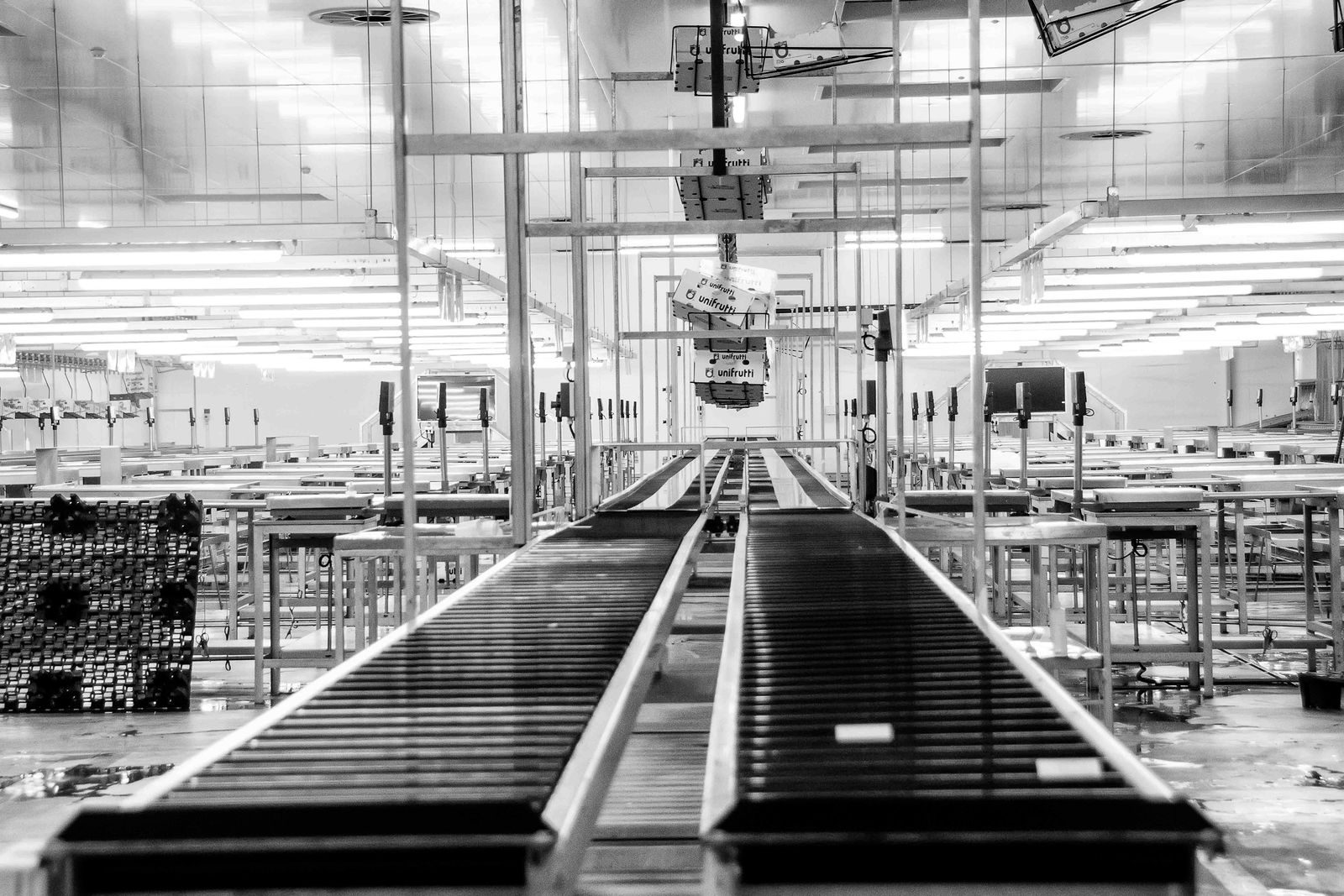
A conveyor that runs straight is the product of three things being correct at the same time: the belt itself, the pulleys it runs on, and the structure that carries them. When any one of those drifts the belt begins to run to one side, and the symptom an operator notices - a belt rubbing the frame - is usually the last thing to appear rather than the first. Understanding the mechanics behind tracking is what turns "adjust the tracking rollers until it stops" into a maintenance routine that actually holds.
Two conditions keep a belt tracking: tension must be even across the belt's width, and the pulleys must be square to the belt's centreline. Running along its length the belt carries the load; across its width it resists being stretched unevenly. If one edge is tighter than the other, the belt steers toward the slack side, because the tight edge travels slightly further per revolution than the loose one. Every mistracking symptom traces back to an asymmetry of that kind.
Crowned pulleys and self-aligning idlers do not create tracking; they correct small asymmetries so the belt returns to centre. They cannot compensate for a structure that is out of square or a load that is habitually off-centre. That distinction matters, because a site that keeps adjusting tracking rollers to chase a fault that is really structural will spend the life of the conveyor doing it.
| Cause | What it looks like | Correct fix |
|---|---|---|
| Pulleys out of square | Belt runs to one side consistently, on and off load | Re-square head and tail pulleys to the centreline; re-tension |
| Uneven belt tension | Belt wanders, worse under load; one edge polished | Re-tension to the manufacturer's figure, evenly across the width |
| Off-centre or surging load | Mistracking only when a particular product or rate is running | Fix the loading point, chute or transition - not the tracking |
| Seized or misaligned idlers | Local rubbing, noise, a flat-spotted roller | Replace the idler; check frame alignment around it |
The order matters. Square the pulleys first, set tension second, look at loading third, and only then touch the self-aligning idlers. Working in that order avoids the common trap of correcting tracking hardware to mask a fault upstream of it.
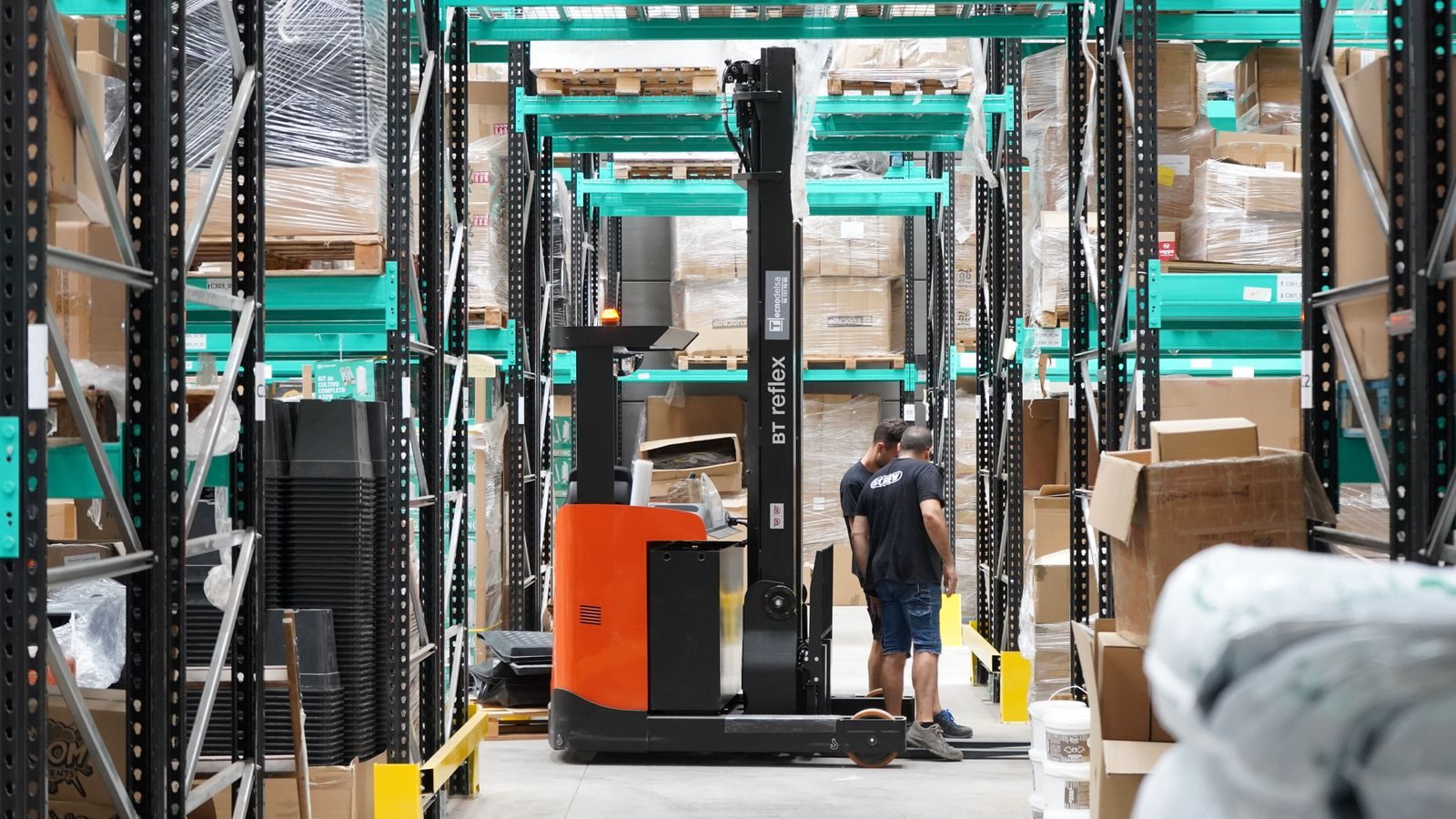
Most persistent tracking problems originate where product is loaded. A chute that drops material off-centre loads one edge more heavily, and a belt carrying an off-centre load steers toward the light side. The same is true at a transition where the belt changes trough depth or passes from a straight run into a curve. Checking that the load lands on the centreline, that skirt rubbers are not pinching one edge, and that any transition idler is set to its designed angle resolves more tracking complaints than any adjustment to the running rollers.
A belt does not need constant attention, it needs the right attention at the right interval. A daily visual check looks for material spillage, unusual noise and obvious edge damage. A weekly walk-down checks idler rotation and wipes the belt down. A quarterly check verifies pulley squareness, take-up travel and tension. An annual stop strips the line back for a full alignment and idler replacement pass. The interval can be stretched on a lightly loaded line and shortened on a heavy one, but the sequence - square, tension, load, track - should not change.
Only if the cause is small and local. Self-aligning idlers are a correction, not a cure; if they are being adjusted every week, the underlying asymmetry of square, tension or loading is still there and will keep returning.
To the figure the manufacturer publishes for that belt on that conveyor, measured at the take-up. A belt that is too loose slips and wanders; one that is too tight overloads the bearings and the carcass, and both failures cost more than the tension check that prevents them.
When the take-up has run out of travel, when the edge is damaged past the point where it will track, or when the carcass is showing ply separation. At that point adjustment only postpones a failure onto the next shift.
Tracking is a discipline, not a repair: the line that is squared and tensioned on a schedule rarely mistracks, and the line that is chased with a spanner rarely stops. ZH Industrial Machinery supplies conveyor systems and the belt, pulley and idler hardware behind them, and we are happy to review a tracking problem against the belt, the load and the layout before anyone reaches for the rollers.
Guarding, access and emergency-stop duties around powered conveyors are the general machine-safety obligations published by the US Occupational Safety and Health Administration. Where a maintenance plan names a component test or a belt specification, it is normally an ASTM International standard, and measurement traceability rests on the framework published by NIST.